
What is deep tissue massage?
Deep tissue massage uses slower, sustained pressure to focus on selected areas rather than distributing attention evenly across the body. The therapist builds pressure gradually and checks how it feels, adjusting the technique to your feedback. The aim is focused muscle work, not simply making the massage as firm as possible.
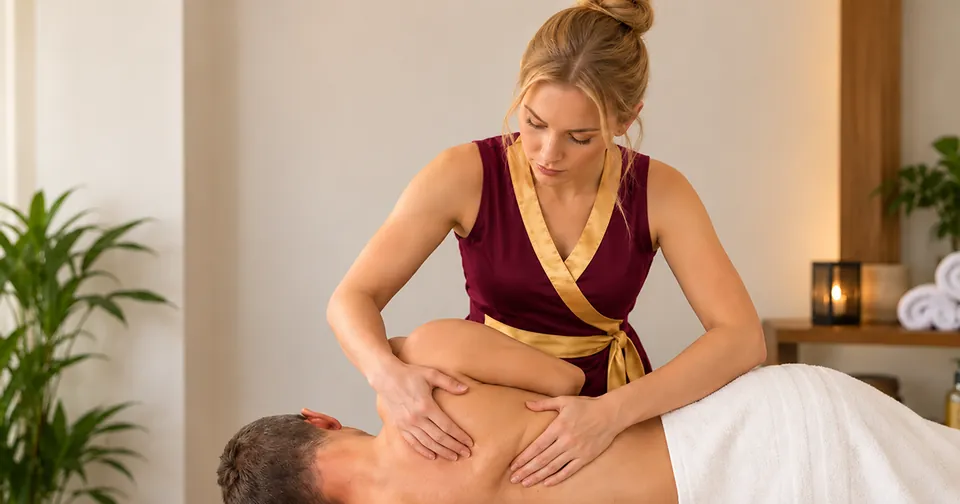
Who books deep tissue?
- People who prefer firm pressure: Those who enjoy a more intensive massage than a gentle, light-pressure treatment.
- People with specific areas in mind: Guests who want the therapist to spend more time on selected areas rather than distribute the session evenly.
- Active individuals: People who prefer firm massage as part of their personal recovery routine, provided it is appropriate for their circumstances.
- Experienced massage guests: Those who already know they prefer slow, sustained pressure to lighter techniques.
Choosing Deep Tissue for a Specific Area
If your shoulders or back are the main areas you want the therapist to focus on, explain this before the session begins. The therapist can discuss how much of the appointment can be devoted to those areas and agree on a comfortable pressure level with you.
How the hour works
- Pinpointing the areas (about 5 minutes). Tell us where you feel tight, what makes it worse, and any injuries or medical conditions. We agree on a pressure scale.
- Warm-up. Lighter strokes first. Deep pressure on cold muscle is uncomfortable and less effective.
- Focused work (about 35 to 40 minutes). Slow, sustained pressure on your priority areas, with regular check-ins. Expect the therapist to stay on one spot for a while.
- Easing off. Lighter strokes over the worked areas to finish.
- Time to get up slowly. You may feel a little light-headed after deep work. Take a moment and some water.
Your pressure, your rules
Deep tissue pressure should be adjusted to your comfort, not pushed towards a particular number. Use this scale to explain what you feel, and speak up if the pressure becomes uncomfortable, sharp or painful.
| Scale | What it should feel like |
|---|---|
| 1–3 | Light: relaxing, no effort to stay relaxed |
| 4–6 | Medium: you feel the muscle being worked, comfortably |
| 7–8 | Firm: intense but "good" pressure; you can still breathe slowly |
| 9–10 | Too much: you're tensing, holding your breath or wincing. Tell us. |
There is no single pressure level that suits everyone. The right intensity is one you can tolerate without bracing, holding your breath or feeling pain. Our guide to massage pressure explains how to communicate your preference.
Deep tissue vs Swedish vs Thai
| Feature | Deep Tissue | Swedish | Thai |
|---|---|---|---|
| Pressure | Firm, slow | Light–medium | Medium–firm |
| Oil | Yes (or cream) | Yes | No; clothed |
| Stretching | Minimal | None | Lots of assisted stretching |
| Focus | Specific tight areas | Whole body | Whole body and mobility |
Compare more options on our Swedish and Thai pages, or ask us on WhatsApp.
Prefer strong, steady pressure over slow, deep work? See Pakistani Massage. Want brisk, whole-body work at medium to firm pressure? See Russian Massage.
What deep tissue can and can't do
Some people find deep tissue massage helps ease muscle discomfort temporarily. Results vary, and massage does not repair every cause of pain or replace medical treatment. It does not detox the body or guarantee changes to scar tissue or posture. If you have persistent pain, numbness, tingling or symptoms following an injury, consult a doctor or physiotherapist before relying on massage.
When to avoid or adapt deep tissue
Before booking, tell us about any health conditions, medication or recent injuries that may affect your suitability for deep tissue massage. In particular, seek advice from an appropriate healthcare professional if you have any of the following concerns:
- A recent injury, sprain, fracture or surgery
- Blood-clotting disorders, a history of deep vein thrombosis, or blood-thinning medication
- Osteoporosis or other bone conditions
- Heart conditions or uncontrolled blood pressure
- Nerve problems such as sciatica, or numbness and tingling
- Skin conditions, bruising or varicose veins in the area to be worked
Before and after
- Before: Avoid arriving immediately after a strenuous workout targeting the same areas, and tell the therapist about any recent pain or injury.
- After: Take the rest of the day at a pace that feels comfortable. Avoid activities that aggravate the areas worked on.
- Monitor how you feel: Mild tenderness can occur after massage, but sharp or worsening pain, significant bruising or swelling should not be dismissed as a normal response.
Common deep tissue myths
- “No pain, no gain.” Firm pressure should not mean enduring pain. Ask the therapist to ease off if you start bracing or feel discomfort.
- “Soreness means toxins were released.” Post-massage soreness is not evidence that toxins have left the body.
- “Deep tissue corrects poor posture.” Massage may change how your muscles feel temporarily, but posture involves movement habits, strength and other factors.
- “Using elbows always makes a massage painful.” Therapists may use different parts of the hand or forearm to apply pressure. The technique and intensity matter more than the body part used.
Getting the most from deep tissue
- Be specific: Identify the areas you want the therapist to prioritise.
- Share relevant information: Mention injuries, medical conditions and any areas you want avoided.
- Speak up early: Ask for less pressure as soon as it feels uncomfortable rather than waiting until the end.
- Check in during the session: Your comfort can change as the therapist works on different areas, so continue giving feedback.
Book deep tissue at Monalisa Spa
Call or WhatsApp +971 52 404 3859 and tell us which areas you'd like us to focus on. We're on 3 Al Nuaimia, Ajman, open 24/7.
Last updated: