What are essential oils?
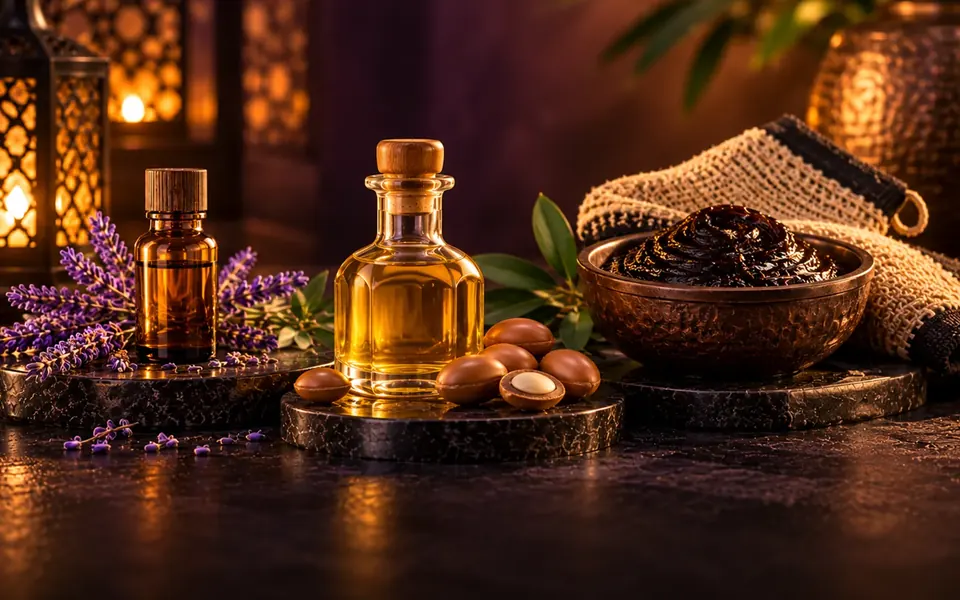
Essential oils are highly concentrated aromatic extracts from plants: flowers, leaves, bark, peel or resin. A few drops of lavender oil can represent a large quantity of the plant. That concentration is what gives them their strong scent, and it's also why they need to be used with care.
In a professional aroma massage, essential oils are always diluted in a "carrier" oil, a neutral base such as grapeseed, sunflower, jojoba, coconut or sweet almond. The carrier makes the oil glide and keeps the essential-oil concentration low enough for skin.
Who should take extra care?
Tell your therapist before an aroma or oil massage if any of these apply:
| If you have… | Why it matters | What we can do |
|---|---|---|
| Plant, fragrance or cosmetic allergies | Essential oils can cause allergic skin reactions | Unscented oil, or a patch test first |
| A nut allergy | Some carrier oils are nut-based; argan comes from a kernel | Choose a nut-free carrier, or an oil-free treatment |
| Sensitive skin, eczema or psoriasis | Oils and fragrance can aggravate irritated skin | Unscented, gentle oil; avoid affected areas |
| Asthma or scent-triggered migraines | Strong aromas can be a trigger | Unscented, or a very light blend |
| Epilepsy | Some essential oils are traditionally advised against | Unscented oil unless your doctor says otherwise |
| Recent sunburn, shaving, waxing, peel or laser | Skin is more reactive | Postpone, or avoid treated areas |
| Medications or a medical condition | Some conditions and medicines change what's suitable | Ask your doctor; we'll adapt |
Common essential oils and their reputations
Here's what people generally use these oils for in massage. These are traditional and sensory associations, not medical claims:
- Lavender: soft, floral; widely associated with calm and evening relaxation.
- Eucalyptus: sharp, fresh; associated with a "clear-headed" feeling. Strong for some people with asthma.
- Peppermint: cool, bright; a tingling sensation on skin. Best used sparingly.
- Citrus (orange, bergamot, lemon): cheerful and fresh. Some citrus oils can make skin more sensitive to sunlight, so avoid strong sun for the rest of the day.
- Sandalwood and cedarwood: warm, woody, grounding; a favourite in the Gulf, where woody scents and oud are much loved.
A patch test, step by step
- Small areaA little of the diluted blend goes on the inner forearm.
- WaitWe wait a few minutes and check for redness, itching or burning.
- DecideAny reaction? We wipe it off and switch to an unscented oil. Note that some allergic reactions take longer to appear, so if you have a history of skin allergies, unscented is the safest choice.
What essential oils can and can't do
Scent has a real effect on how we feel. Pleasant smells can make an experience more relaxing and enjoyable, and that is reason enough to use them. Scientific studies of aromatherapy are generally small and mixed, and essential oils are not proven treatments for anxiety, insomnia, infections or pain. For a balanced, evidence-based overview, see the US National Center for Complementary and Integrative Health's page on aromatherapy.
Things a professional should never do
- Apply undiluted essential oil directly to your skin
- Use essential oils near your eyes
- Insist on a scent you've said you dislike
- Skip asking about allergies
- Claim an oil will "cure" or "detox" anything
After your massage
- If you notice redness, itching or a rash later, wash the area with mild soap and water, and seek medical advice if it doesn't settle or if you have any difficulty breathing.
- After citrus blends, avoid strong sun on oiled skin for the rest of the day.
- Let us know about any reaction so we can note it for next time.
Aroma massage at Monalisa Spa
Our Aroma Fusion Massage uses diluted essential-oil blends you choose (calm, fresh, warm or unscented), and we always ask about allergies first. If oils aren't right for you, Thai Massage is fully clothed and oil-free.
Quick answers
Are essential oils safe for massage?
For most healthy adults, yes, when they're properly diluted in a carrier oil. Undiluted essential oils shouldn't be applied to skin.
What is a patch test?
A small amount of the diluted oil is applied to a small area of skin, such as the inner forearm, to check for redness or itching before it's used more widely. Allergic reactions can sometimes take longer to appear, so if you're very sensitive, an unscented oil is safest.
I have a nut allergy. Which oils should I avoid?
Some carrier oils come from nuts (for example sweet almond or macadamia), and argan is pressed from a kernel. Tell us about any nut allergy before your massage so we can choose a suitable oil, or go oil-free with Thai massage.