What happens in a Moroccan bath?
In Morocco, the hammam (a public bathhouse with warm rooms and running water) has been part of weekly life for centuries. People go to get properly clean, to warm up, to talk, and to leave feeling renewed. The ritual has a recognisable rhythm: warm, soap, scrub, rinse.
At Monalisa Spa, a therapist carries out each stage of the treatment, allowing the cleansing and exfoliation process to be adjusted to your comfort.
The four stages
- WarmYour skin is warmed and softened with warm water, the way a hammam's heat opens up the skin. Warm water prepares the skin for cleansing and exfoliation. The water should be comfortably warm rather than hot, especially for guests with sensitive skin.
- SoapTraditional black soap, savon beldi, is smoothed over the body. It's a soft, paste-like soap made with olive oil, and it's left on for a few minutes to soften the outer layer of skin.
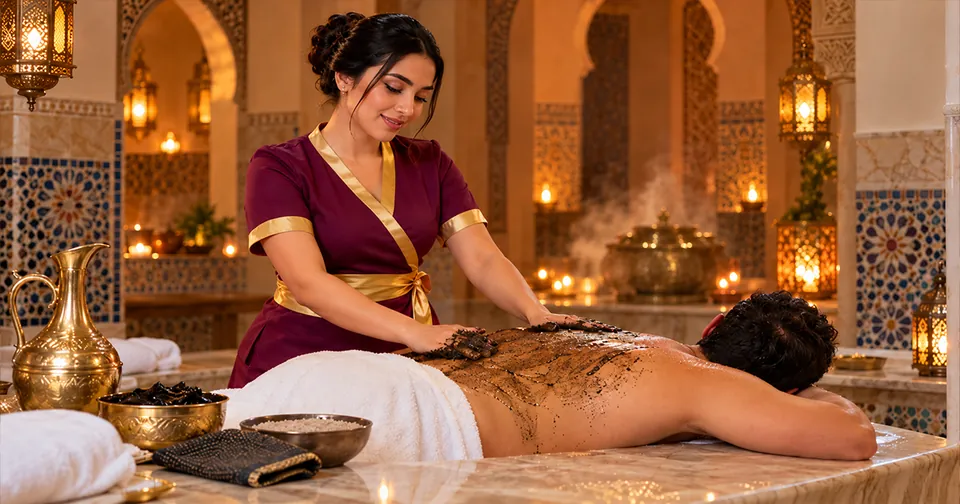
- ScrubThe therapist uses a kessa mitt, a textured exfoliating glove, in firm, long strokes. This is the part people remember: you'll see dead skin lift away, which is surprisingly satisfying.
- Rinse and restEverything is rinsed away with warm water. You finish wrapped in a towel, with skin that feels noticeably smoother.
How does it feel?
Most guests describe three sensations:
- Warmth: comforting and slow, especially welcome in an air-conditioned climate.
- Texture: The pressure should remain comfortable, and you should ask the therapist to stop or lighten it if you feel pain or excessive irritation.
- Freshness: afterwards your skin feels squeaky-clean, soft and slightly tingly, and you'll probably feel lighter.
The exfoliation may leave your skin temporarily pink or sensitive, so let your therapist know if you experience discomfort and avoid further exfoliation until your skin has recovered.
Bath, massage or both?
Choose your treatment based on your main priority: body exfoliation, an oil-based massage, or a combination of both. The comparison below explains what each option includes.
| If you want… | Book |
|---|---|
| Clean, smooth skin and a fresh feeling | Moroccan Bath (60 min, AED 99) |
| Warmth and relaxed muscles | Moroccan Massage (60 min, AED 99) |
| The full experience | Bath then massage (2 × 60 min, AED 99 each) |
| Calm and scent, with less intensity | Bath then Aroma Fusion |
Booking both? Tell us when you message so we can reserve the time back-to-back.
Why book a Moroccan bath at Monalisa?
Monalisa Spa offers a straightforward Moroccan Bath booking in Al Nuaimia, Ajman, with a published price of AED 99 for 60 minutes. Guests can also ask about combining the bath with a massage, subject to appointment availability.
- One clear price: AED 99 for 60 minutes, with nothing added at the desk.
- Any time of day or night: we're open 24/7, which suits shift workers and late finishers.
- Pairing done properly: because our signature treatments are warm and oil-based, a bath followed by a Moroccan or Aroma Fusion massage fits naturally.
Think of someone back from a week of site work in the heat. Sunscreen, dust and sweat have built up day after day. A shower helps, but it doesn't feel like a reset. An hour of warmth, black soap and a proper scrub is the kind of clean that a quick shower doesn't reach.
What a Moroccan bath can and can't do
- What it cannot do: Detoxify the body, remove internal toxins, treat acne or eczema, or cause weight loss. A Moroccan bath is a cosmetic cleansing treatment, not a medical treatment.
- What it can do: Exfoliate the skin's surface and help it feel smoother after treatment.
Is it suitable for you?
A Moroccan bath may not be suitable for every skin type or health condition. Tell us about any relevant concerns before booking so you can discuss whether the treatment is appropriate.
- Sunburn, cuts, rashes, eczema or psoriasis flare-ups, or other broken or inflamed skin
- Shaved or waxed skin in the last 24 to 48 hours, or a recent chemical peel, laser or other cosmetic skin treatment
- Heart conditions, uncontrolled blood pressure, or a tendency to feel faint in heat
- A fever, infection, or recent surgery
- Diabetes affecting skin sensation (scrubbing pressure may need to be very gentle)
If you're not sure, message us first and we'll talk you through it.
Before and after
Before
- Avoid shaving the areas to be scrubbed on the same day.
- Eat lightly and drink some water. Warmth can be dehydrating.
After
- Moisturise, or enjoy a Moroccan Massage straight after.
- Avoid strong sun for the rest of the day, as freshly exfoliated skin is more sensitive.
- Skip another scrub for at least a week or two.
Myths about the Moroccan bath
- "The material that rolls off proves how much dirt was on my skin." Not necessarily. The material may contain loosened dead skin, soap residue and product residue. Its appearance alone cannot measure how clean your skin was before treatment.
- "Harder scrubbing is better." No. Over-scrubbing can irritate skin. Firm, even strokes are enough, and sensitive areas need less.
- "It detoxes you." A Moroccan bath cleans and exfoliates the skin's surface. It doesn't remove toxins from the body.
- "You should do it every week." Most skin does better with a few weeks between deep exfoliations.
What is black soap (savon beldi)?
Savon beldi, meaning "traditional soap", is a soft, dark, gel-like soap made from olive oil, often with crushed olives. It's quite different from the bar soap most of us use. It's left on the skin for a few minutes before scrubbing, which softens the outer layer and helps the kessa mitt lift away dead skin more easily. Some versions are scented, for example with eucalyptus. If you have sensitive skin or allergies, tell us before your bath.
What is a kessa mitt?
A kessa (also spelled kese or kessa) is a coarse exfoliating glove, traditionally made from a textured fabric. During a Moroccan bath, the therapist uses the mitt to exfoliate the skin's surface. Its textured fabric creates friction, so the pressure should be adjusted to your skin's sensitivity and comfort.
Book your Moroccan bath
To arrange your Moroccan Bath, message us with your preferred appointment time and whether you would like to add a massage. We will confirm availability before you travel.
Book a Moroccan Bath on WhatsApp
Last updated: