What is Swedish massage?
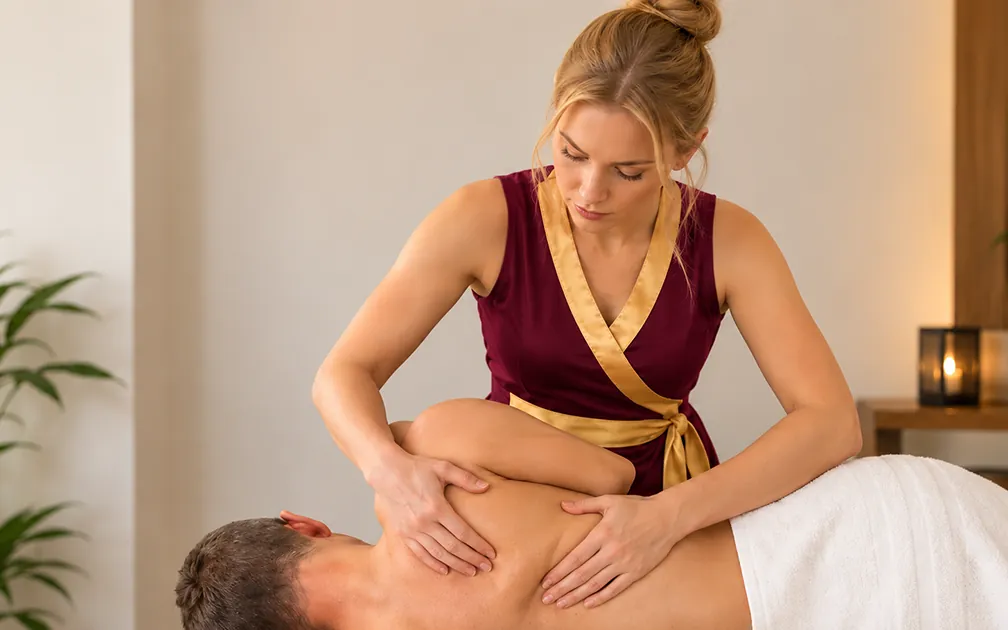
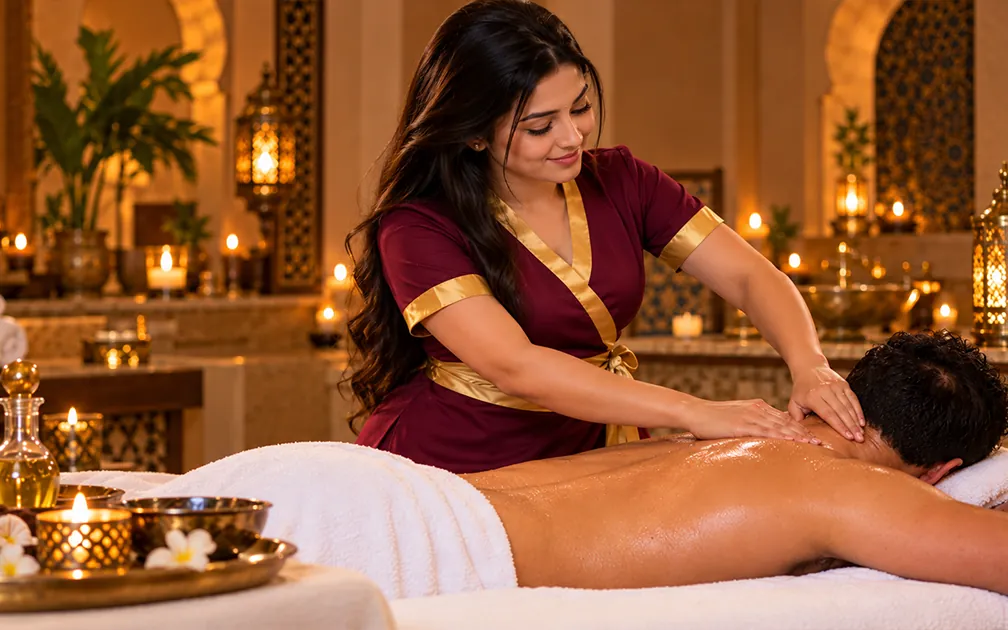
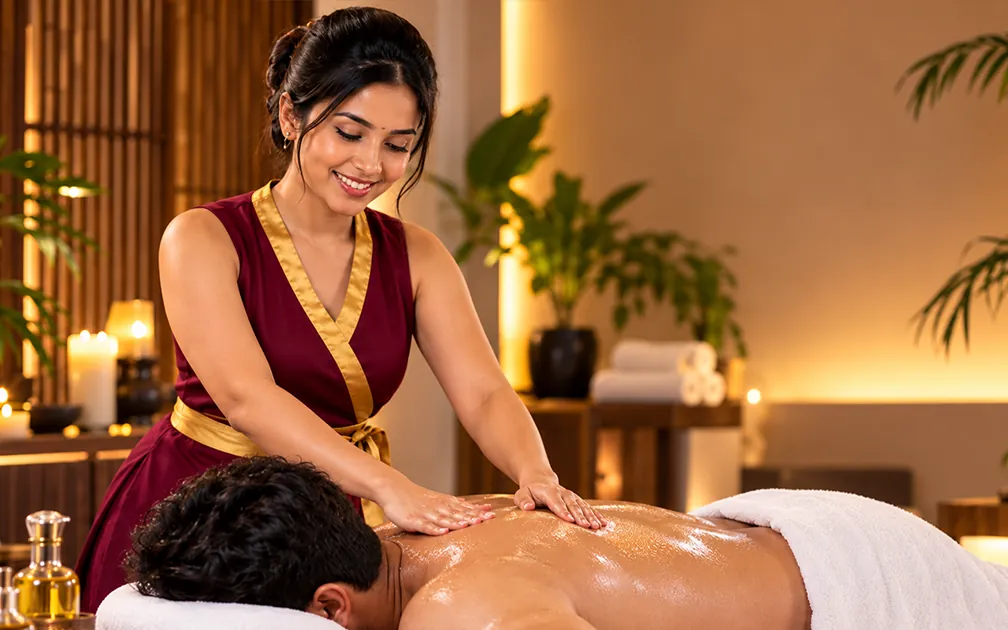
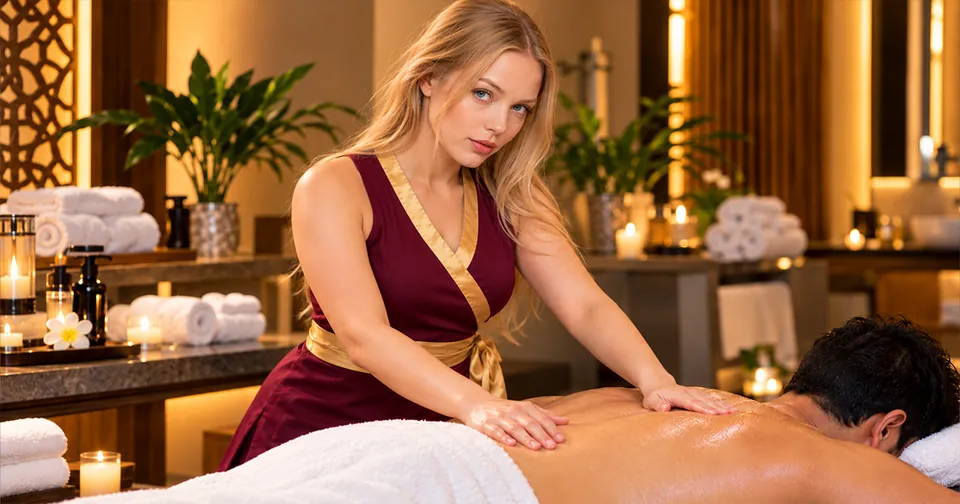
If you've had a massage in a hotel spa anywhere in the world, there's a good chance it was Swedish, or built on it. It's the foundation most Western massage styles grow from, and it's built around a small set of techniques:
| Technique | What it is | What it feels like |
|---|---|---|
| Effleurage | Long, gliding strokes with flat hands | Smooth, warming, the "signature" Swedish stroke |
| Petrissage | Kneading, lifting and rolling the muscle | Deeper, working into larger muscles like the shoulders and calves |
| Friction | Small, focused circular movements | Targeted, often used around shoulder blades |
| Tapotement | Light rhythmic tapping or cupping | Brisk and energising, used briefly |
| Vibration | Gentle shaking or rocking | Loosening, sometimes used to finish an area |
A good Swedish massage moves between these smoothly, so it feels like one continuous treatment rather than a list of techniques.
A little history
Swedish massage is associated with the development of Western massage practices in Europe during the 19th century. Its familiar techniques are commonly known by French names, including effleurage and petrissage. The modern style evolved through a broader history of movement practices and manual therapy.
Why choose Swedish?
- A balanced approach: Combines flowing strokes with kneading and other established massage techniques.
- Adjustable pressure: Tell your therapist whether you prefer lighter or firmer movements.
- Whole-body coverage: A suitable option when you want attention across several areas rather than concentrating only on one tight spot.
- An alternative to deep tissue: Choose Swedish for a flowing massage, or deep tissue if you prefer slower, firmer work focused on particular areas.
Your 60 minutes
- Consultation. We ask about pressure, focus areas, injuries and allergies.
- Back, neck and shoulders (about 25 minutes). Effleurage to warm up, then petrissage and friction through the shoulders and upper back, the usual home of desk and driving tension.
- Back of the legs (about 10 minutes). Long strokes and kneading through the calves and hamstrings.
- Front: legs, arms and hands (about 15 minutes). You turn over under the towel. Lighter work on the front of the legs and arms.
- Finish. Slow strokes to close, then time to come back to the room.
Swedish vs deep tissue
This is the comparison we're asked about most:
| Feature | Swedish | Deep Tissue |
|---|---|---|
| Pressure | Light to medium | Firm, slow and sustained |
| Pace | Flowing, varied | Slow, focused |
| Focus | Whole body, overall relaxation | Specific tight areas |
| Afterwards | Relaxed, loose | Looser, sometimes mildly tender for a day |
| Choose it if… | You want a balanced, classic massage | You like firm pressure and have specific tightness |
Choose Swedish for flowing, adjustable-pressure massage across the body. Choose deep tissue if you prefer slower, firmer pressure focused on specific areas. For more detail, see Light, Medium or Firm? A Plain Guide to Massage Pressure.
Want something livelier and usually firmer? Russian Massage uses rubbing, kneading and light tapping.
When this treatment may suit you
Swedish massage is the style most often used in research on massage. Studies generally support short-term benefits for relaxation, mood and the feeling of reduced muscle tension. Evidence for longer-term or medical benefits is more limited and mixed. We think of Swedish massage as a genuinely pleasant way to look after yourself, not as a treatment for a condition.
If you prefer a full-body massage with adjustable pressure rather than intensive work on one area, Swedish massage may be a suitable option. Tell your therapist about your preferences before the session begins.
Precautions
Please tell us before your session if you have:
- A recent injury, sprain or surgery
- Skin conditions, sunburn or allergies to oils
- Varicose veins, blood-clotting conditions or blood-thinning medication
- Heart conditions or high blood pressure
- A fever or infection
When in doubt, check with your doctor first. Massage should never replace medical advice.
Tips for a great Swedish massage
- Name one or two focus areas at the start. Shoulders and lower back are the most common.
- Use a simple scale. "About a 6 out of 10" is easier for a therapist to work with than "a bit harder".
- Breathe out as the therapist works into a tighter spot. It helps the muscle soften.
Common myths about Swedish massage
- "Swedish is just a 'basic' massage." It's the foundation of Western massage because it works. A skilled Swedish massage is anything but basic.
- "It can't help with tension." At medium pressure, with kneading and friction on tight areas, Swedish can ease everyday tension very effectively.
- "Massage flushes out toxins." You'll hear this a lot, but there's no good evidence for it. Drinking water afterwards is simply sensible.
How Swedish fits into a routine
Your choice of massage can change with your preferences each time you visit. You might prefer Swedish for a balanced full-body session, deep tissue for firmer focused work, or a gentler treatment when relaxation is your main priority.
Book a Swedish massage in Al Nuaimia
To book your Swedish massage, message us with your preferred time and any areas you would like the therapist to focus on. We will confirm availability before you travel.
Last updated: